
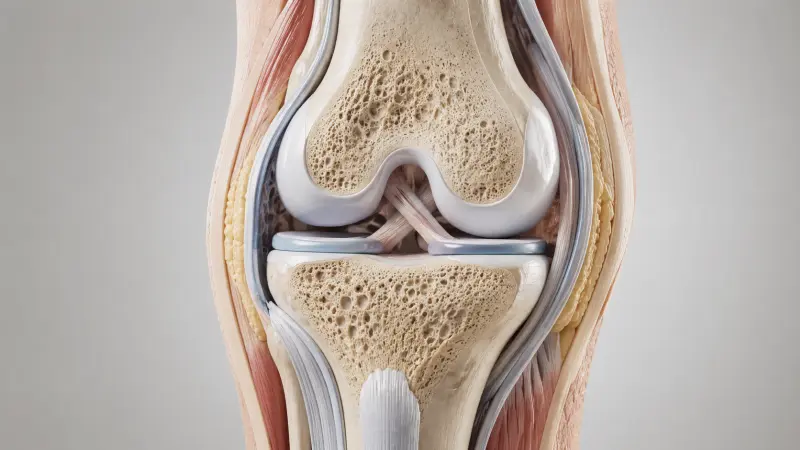
Osteoarthritis has no cure. Current treatment manages pain and, eventually, replaces the joint. That is the backdrop against which a June 2026 study from Stanford Medicine drew significant attention. The findings are genuinely notable. They are also, at this stage, about mice and lab tissue, not people, and the gap between those two things is worth being precise about.
What the study found
Researchers identified a protein called 15-PGDH that increases with age and appears to suppress the body’s ability to repair tissue. Blocking this protein restored lost knee cartilage in older mice and prevented arthritis from developing after joint injuries designed to mimic ACL tears. The same research group had previously linked this protein, part of a class they call “gerozymes,” to age-related muscle decline.
The part that extended interest beyond a mouse study: human cartilage samples taken during knee replacement surgery, tissue already degraded enough to require surgical removal, began producing new cartilage when exposed to the treatment in the lab. That does not mean the treatment works in a living human joint. It means the biological pathway appears active in human tissue as well as mouse tissue, which is a meaningful but different claim.
How this fits with existing options
No approved drug currently slows or reverses cartilage loss. Existing treatments manage symptoms (pain relief, injections, physical therapy) or replace the joint once damage is advanced. A treatment that could regenerate cartilage biologically would be a different category of intervention entirely, not an incremental improvement on what exists.
An oral version of a 15-PGDH inhibitor is already in Phase 1 human trials, though for a different purpose: age-related muscle weakness, not joint cartilage. Phase 1 trials test safety, not effectiveness, and this trial was not designed around cartilage outcomes.
What this does not establish
Mouse studies frequently fail to translate to humans, for reasons ranging from dosing differences to basic biological divergence between species. Human cartilage responding to a compound in a petri dish is also a considerable distance from a treatment that works inside a living joint, where blood supply, immune response, and mechanical load all differ from a lab dish. No human trial testing this compound specifically for cartilage regeneration currently exists.
None of this makes the finding unimportant. It identifies a specific, testable biological mechanism behind why aging joints lose the capacity to repair themselves, something that was not well understood before. That is a meaningful step in a field that has had very few of them. It is not evidence that a cartilage-regenerating treatment is available, or close to available, for people currently living with osteoarthritis.
The realistic timeline
Even a promising Phase 1-ready compound typically takes years to move through the additional trial phases required to establish both safety and effectiveness for a new indication, and most compounds that look promising in animal studies do not make it through that process. If this treatment does eventually reach the clinic for joint cartilage specifically, it would follow, not precede, dedicated human trials that do not yet exist.
For now, the practical guidance for anyone managing joint health has not changed. Weight management, appropriate strength training around affected joints, and aerobic exercise remain the interventions with actual clinical trial evidence behind them for osteoarthritis. This research is worth watching. It is not yet something to act on.