
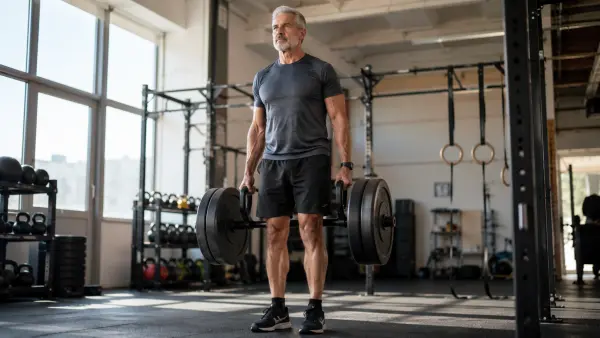
Grip strength has become a favorite talking point in longevity circles, often described as a better mortality predictor than blood pressure. That claim traces back to real research. What gets lost in translation is what the research’s own authors said about how far that finding should be pushed.
The Study Behind the Claim
The Prospective Urban Rural Epidemiology study followed nearly 140,000 adults across 17 countries for about four years. Each 5-kilogram decrease in grip strength was associated with a 16 percent higher risk of all-cause mortality and a 17 percent higher risk of cardiovascular mortality, adjusted for age, physical activity, and other factors. Grip strength outperformed systolic blood pressure as a predictor of death from any cause, a finding that held across income levels and geographic regions.
This wasn’t a fringe result. A separate meta-analysis of 42 studies covering more than 3 million participants found a consistent association, and grip strength is now widely used in geriatric research as a marker of frailty and functional decline.
What Grip Strength Actually Reflects
Grip strength correlates with overall muscle mass, nervous system function, and markers of inflammation and vascular health. It’s a proxy for total-body physiological reserve, not a measurement that’s meaningful in isolation. This is why researchers describe it as a useful screening signal rather than a specific mechanism of disease.
The Caveat That Gets Skipped
The lead author of the PURE study was explicit about this in the paper’s own discussion: further research was needed to establish whether efforts to improve muscle strength actually reduce mortality risk, as opposed to strength simply reflecting an already-healthier person. Grip strength predicting death is not the same claim as training your grip extending your life. Those are different questions, and the second one has far less direct evidence behind it than marketing around grip trainers and dead-hang programs tends to suggest.
A 2024 analysis using NHANES data found the strength of the association varied by sex and by how grip strength was measured and standardized, which is a sign the relationship is more complicated than a single number suggests. It’s also worth noting that grip strength is one of several functional markers researchers track, alongside walking speed and chair-rise ability, not a standalone replacement for them.
The Reasonable Take
Grip strength is a legitimate, well-replicated, low-cost marker of overall health and functional reserve, particularly in older adults. It’s not evidence that squeezing a hand gripper or doing dead hangs specifically will extend anyone’s life. General resistance training that builds and maintains total-body muscle mass is what the underlying research actually points to, with grip strength as one of the things that tends to improve alongside it, not the lever being pulled.